Top Benefits of Using Fruit Sorting Machines for Efficient Processing
The modern agricultural landscape relies heavily on technology. One of the key innovations is the fruit sorting machine. These machines enhance efficiency and accuracy in processing. According to Dr. Emily Santos, an expert in agricultural automation, "A fruit sorting machine can transform the way we manage our harvests." Her insights resonate deeply with farmers seeking to improve their operations.
Fruit sorting machines automate labor-intensive tasks. They can sort through various fruit types in a fraction of the time it takes laborers. This not only saves time but also reduces the risk of human error. Imagine a processor managing thousands of fruits daily with near-perfect accuracy. This level of efficiency can significantly cut costs and increase profitability.
Yet, not all systems are perfect. Some machines may struggle with certain fruit sizes or ripeness levels. Maintenance is crucial for optimal performance, and many operations overlook this aspect. Reflecting on these issues is essential. It highlights the need for continuous improvement in the use of fruit sorting machines to meet evolving agricultural demands.
Advantages of Automating Fruit Sorting Processes
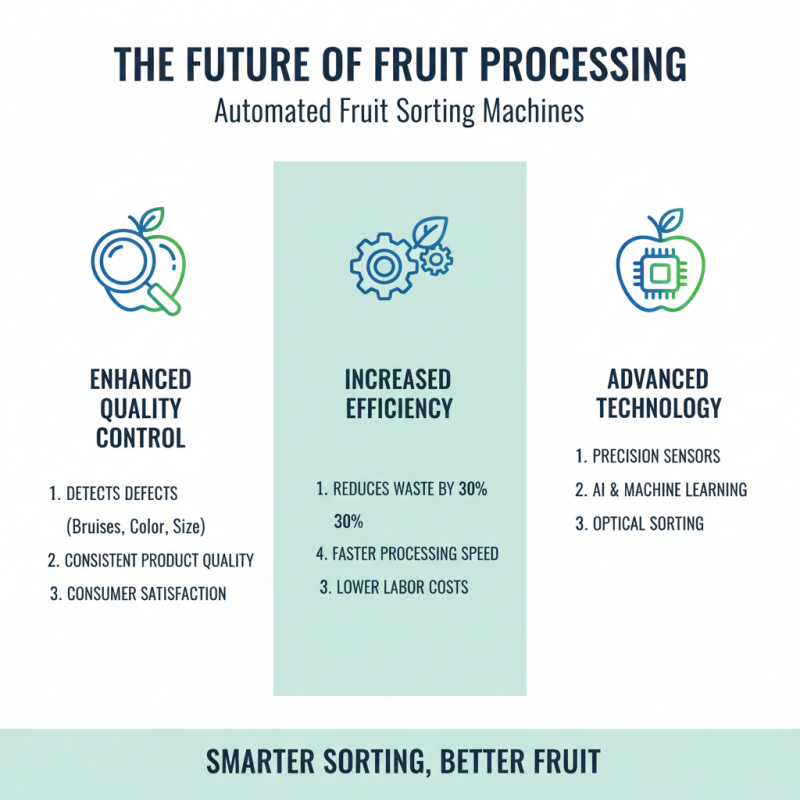
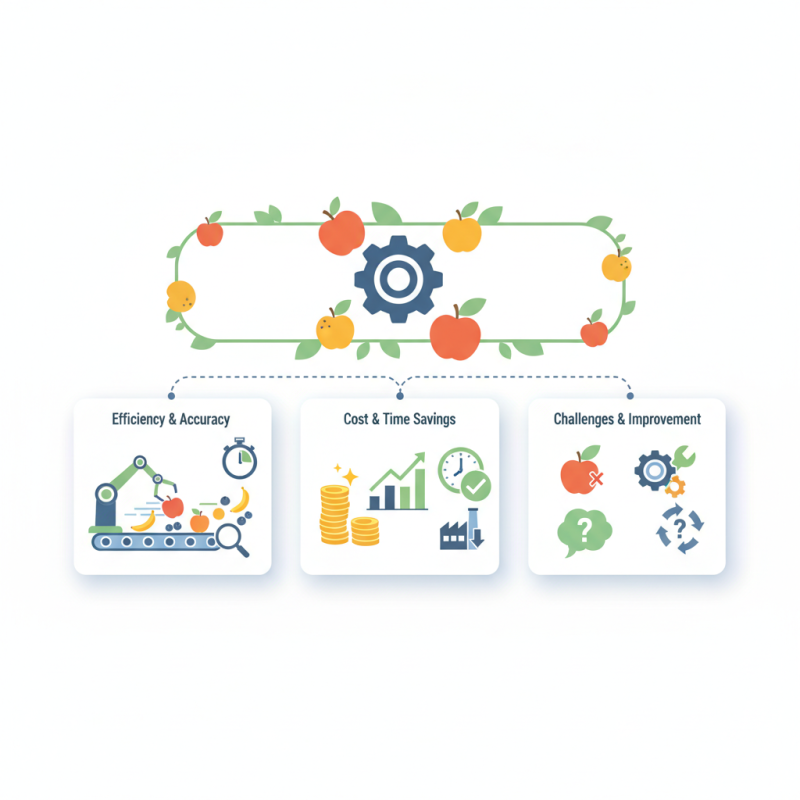
Automating fruit sorting processes brings numerous advantages to the agricultural sector. According to a recent industry report, automated sorting machines can increase efficiency by up to 30%. They process fruits more quickly than manual methods. This speeds up the supply chain, allowing fresher produce to reach consumers faster.
Moreover, these machines reduce labor costs significantly. The average cost of labor in fruit sorting can account for up to 20% of total production costs. Automation can lower this by streamlining the sorting process. However, implementing such technology requires an initial investment. For some farms, this can be a barrier.
Further, quality control improves with automation. Machines can sort fruits based on size, weight, and color, ensuring consistent quality. A consistent product can lead to better customer satisfaction. Research shows that companies achieving higher quality goods experience less waste, potentially reducing losses by 15%. Despite these benefits, farmers must be cautious about the integration. Training staff to work alongside machines is also essential for the transition.
Top Benefits of Using Fruit Sorting Machines for Efficient Processing
| Benefit |
Description |
Impact |
| Increased Efficiency |
Automated sorting processes significantly reduce the time needed for sorting fruits. |
Up to 50% faster sorting compared to manual methods. |
| Consistency |
Machines provide uniform sorting standards leading to consistent product quality. |
Improves customer satisfaction and brand reputation. |
| Labor Cost Reduction |
Automation reduces the number of labor hours required for sorting. |
Potential savings of 30% on labor costs annually. |
| Minimized Waste |
Sorting machines can detect and remove defective fruits, reducing waste. |
Decreases total product loss by nearly 20%. |
| Data Tracking |
Automated systems can collect data on fruit sizes, varieties, and sorting rates. |
Enhances inventory management and decision-making processes. |
Improved Efficiency in Fruit Processing Operations
In the modern fruit processing industry, efficiency is paramount.
Fruit sorting machines enhance this efficiency significantly. According to a report from the International Society for Horticultural Science,
automated sorting can improve throughput by up to 35%. This is a remarkable increase in productivity for processors aiming to meet consumer demand.
Sorting machines not only save time but also reduce labor costs. These machines can sort fruits by size, color, and ripeness,
ensuring only the best products reach consumers. Studies show that implementing automated systems can lower workforce needs by about 20%.
However, many companies still rely on manual sorting, which can lead to inconsistencies.
This adds unnecessary costs and reduces product quality.
Despite these benefits, some processors hesitate to adopt technology. The initial investment can be daunting.
They often wonder if the return justifies the expense. Yet, evidence suggests that maintaining quality and efficiency outweighs these initial costs.
As global competition rises, not embracing technology may lead to stagnation. The challenge lies in balancing investment and anticipated gains effectively.
Enhanced Quality Control with Sorting Technology
Fruit sorting machines are increasingly important in the food processing industry. They significantly enhance quality control, ensuring that only the best fruits reach consumers. Advanced sorting technology can detect defects such as bruises, color inconsistencies, and size variations with remarkable accuracy. Reports indicate that automated sorting can reduce waste by up to 30%, highlighting its efficiency.
Fruits sorted by machines often meet higher quality standards. For instance, a study found that 95% of fruits processed through automated sorting met or exceeded market expectations. This level of control benefits both suppliers and customers. However, some smaller operations may struggle to adopt this technology due to high initial costs. They need to reflect on whether the long-term savings will outweigh these upfront investments. The balance between technology and cost remains a challenge for many.
In addition, while the data shows a positive impact on quality, quality control is not foolproof. Human oversight is still essential. Machines miss subtle flaws sometimes, leading to potential dissatisfaction among consumers. Buyers may receive fruits that do not look as expected. The reliance on technology raises questions about maintaining a personal touch in quality assurance. Balancing machine efficiency with human judgment is crucial for achieving optimal quality in fruit processing.
Reduction of Labor Costs through Automation
The implementation of fruit sorting machines offers significant benefits, particularly in reducing labor costs. Automation alleviates the need for a large workforce, streamlining the sorting process. With machines handling the bulk of sorting tasks, human labor can be allocated to more complex jobs that require critical thinking.
Few jobs are as repetitive as sorting fruit. Employees often experience fatigue and boredom, leading to potential errors. Machines, in contrast, maintain consistent speed and precision. They can identify imperfections and sort fruits based on size or color without tiring. This efficiency can potentially double the output, making operations more profitable.
Moreover, investing in sorting technology can lead to concerns over job loss. While automation takes over mundane tasks, it opens up opportunities for roles in tech maintenance and quality control. Adapting to this change may be challenging for some workers. Embracing technology today could be a stepping stone to greater innovation tomorrow. Balancing labor and automation is vital for a successful transition in this industry.
Top Benefits of Using Fruit Sorting Machines
Increased Consistency in Product Quality and Market Standards
Using fruit sorting machines significantly boosts consistency in product quality. These machines ensure that every piece of fruit meets market standards. By automating the sorting process, you minimize human errors. This leads to a more uniform product, appealing to consumers.
When selecting a sorting machine, consider its speed and accuracy. High-speed machines can process large volumes efficiently. However, speed should not compromise quality. Look for a machine that balances both.
Tip: Regular maintenance is crucial. Machines can wear out over time, affecting their performance. Set a schedule for checks to ensure optimal functioning. Inconsistent results can frustrate both producers and customers alike. The right machine can help alleviate these issues, but attention is key.
Implementing a sorting machine requires initial investment. Yet, the long-term benefits can outweigh these costs. Analyze your specific needs before purchasing. Picking the right machine can lead to better market competitiveness.