How to Choose the Best Food Filling Machine for Your Needs?
In today's fast-paced food industry, the right food filling machine can significantly impact efficiency and quality. According to recent reports, the global food filling machine market is expected to grow at a CAGR of 5.4% between 2021 and 2028. Companies must adapt to increasing demands for speed and precision. Choosing the right equipment is crucial for maintaining product integrity while boosting production rates.
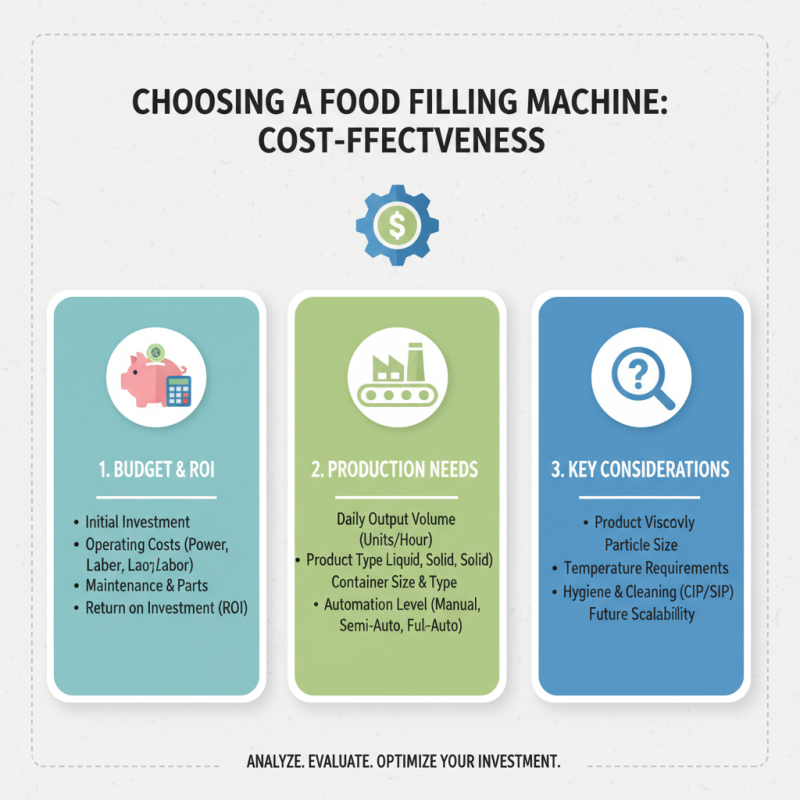
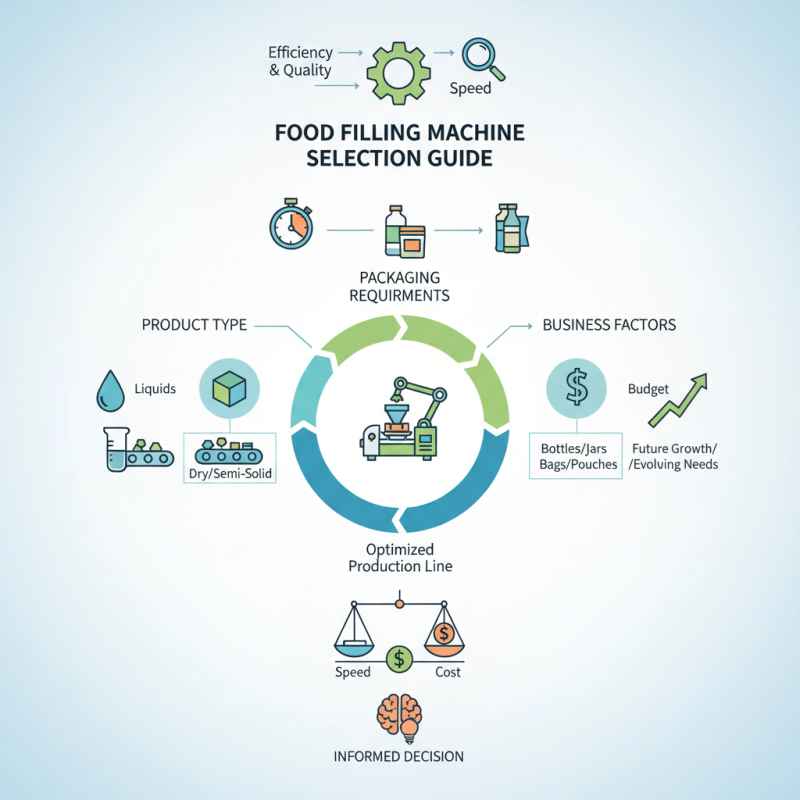
Various factors influence this decision, including the type of food product and packaging requirements. For instance, liquid products require different filling mechanisms than dry or semi-solid items. An overwhelming number of options can make it hard to find the perfect fit. Additionally, budgeting constraints often force compromises that may not serve long-term goals.
Reflecting on past choices can be enlightening. Some businesses have faced challenges by selecting machines that didn’t meet evolving needs. Balancing speed, cost, and quality remains a constant struggle. Understanding the specifics of your production line is essential for making an informed decision.
Understanding Different Types of Food Filling Machines Available
Choosing the right food filling machine is essential for efficient production. There are several types of machines available in the market. Each type serves a specific purpose based on the product you are packaging.
Gravity fillers are great for liquids. They work by relying on gravity to fill containers. This is a simple solution for thin liquids like water and juice. However, it may not perform well with thicker products. For those, consider using piston fillers. They use a piston mechanism to dispense more viscous liquids. But remember, adjusting the machine can often take time and patience.
Vacuum fillers are ideal for products that can’t afford air exposure. They work by removing air from the container before filling. This helps preserve freshness. When looking for a machine, think about the level of automation you need. Fully automated machines can save labor costs but may require a higher initial investment.
**Tips:** Evaluate the types of products you intend to fill. Test different machines before purchasing. Manual adjustments may help solve any issues while filling. This process might take some trial and error but is crucial for success.
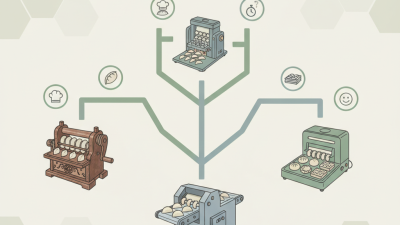
Food Filling Machine Types and Their Popularity
Assessing Your Production Needs and Volume Requirements
Assessing your production needs is crucial when selecting a food filling machine. The volume of products you plan to produce directly influences the type of equipment you need. For instance, a small bakery may require a machine that handles up to 500 units per hour. In contrast, a larger factory could need equipment that supports 2,000 units or more. The difference in specifications can drastically affect budget and efficiency.
Understanding your specific requirements will streamline your production process. A recent industry report from the Food and Beverage Equipment Manufacturers Association suggests that around 40% of manufacturers do not evaluate their volume needs properly. This oversight can lead to bottlenecks and reduced output. It’s essential to analyze factors like product type, filling speed, and operational shifts.
Also, consider the flexibility of the machine. As trends change, so might your volume requirements. Investing in equipment that can adapt to varying production demands is a wise strategy. Research indicates that over 60% of businesses wish they had selected more versatile machines. Reflecting on these aspects will help ensure that your choice meets both current and future needs effectively.
How to Choose the Best Food Filling Machine for Your Needs?
| Feature |
Description |
Suitable For |
Production Volume (units/hour) |
| Semi-Automatic Machine |
Requires manual operation for filling |
Small to Medium Businesses |
500-1000 |
| Fully Automatic Machine |
Complete automation for high efficiency |
Large Scale Production |
2000-5000 |
| Piston Filling Machine |
Ideal for viscous products |
Sauces, Purees |
800-1500 |
| Gravity Filling Machine |
Perfect for thin, free-flowing liquids |
Juices, Water |
1000-3000 |
| Vacuum Filling Machine |
Suitable for products sensitive to air |
Wines, Oils |
600-1200 |
Key Features to Consider in a Food Filling Machine
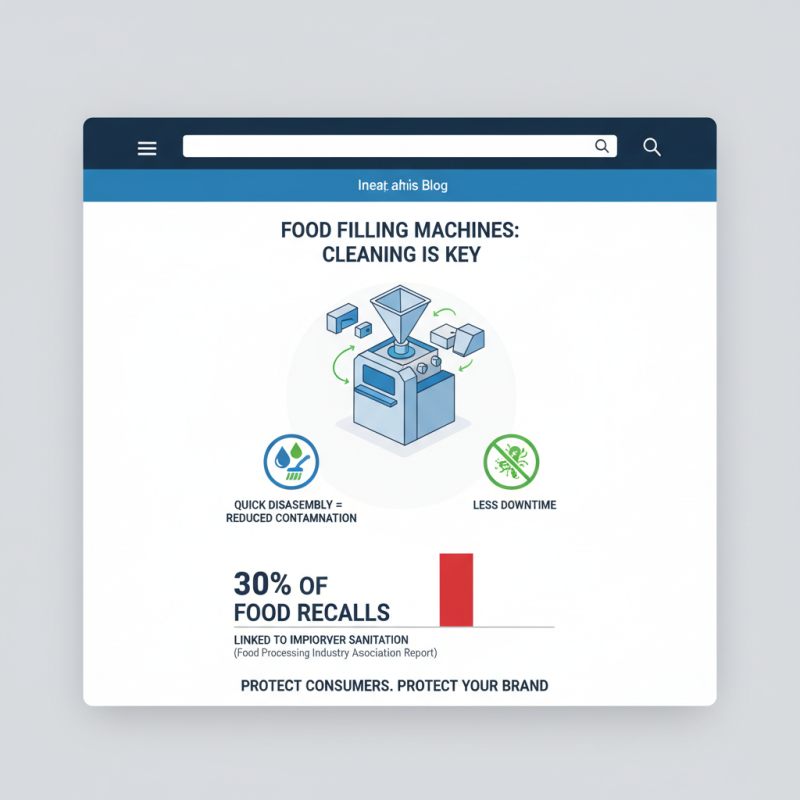
When selecting a food filling machine, various features come into play. Ease of cleaning is paramount. Machines that can be disassembled quickly reduce beverage contamination risks. According to a report from the Food Processing Industry Association, 30% of food recalls are linked to improper sanitation practices.
Next, consider the machine's flexibility. A machine that handles multiple packaging styles can boost efficiency. Reports indicate that businesses with versatile machines saved up to 25% on production costs. However, these machines may require more frequent calibration. This can interrupt workflow and delay production.
Finally, speed is a crucial factor. High-speed machines can achieve filling rates of up to 1,200 packages per minute. However, a faster machine might come with complexity. Operators need training to handle the rapid pace. Without adequate training, errors can lead to product waste. Choosing the right machine isn't just about speed—it's about balancing various aspects for optimal productivity.
Researching Manufacturer Reputation and Support Services
When selecting a food filling machine, consider the manufacturer’s reputation. Research online reviews and testimonials. Engaging in forums can offer insights. Look for companies with a consistent positive track record. Well-established manufacturers usually provide reliable machines. Newer companies may offer innovative features but could lack support.
Don’t underestimate the importance of customer support services. It's essential to choose a manufacturer who prioritizes after-sales support. Ask about training programs, maintenance services, and response times. Machines can have issues. A manufacturer that offers robust support can help minimize downtime.
Be aware of potential gaps in service. Some manufacturers may promise quick responses but fail to deliver. Contact their support team with questions. Assess how quickly and effectively they respond. This will give you a clearer idea of their commitment to service. Making the right choice involves careful consideration of both the machine and the support you will receive.